

Intelligence
A Common Problem
Assumptive Descision Making
Many businesses make strategic decisions based on internal assumptions rather than clear market evidence. They may have strong capabilities, but they are not positioned around the right market opportunity, buyer demand, competitor weakness, or emerging trend.
- Competitors appear more visible, clearer, or more credible in the market.
- The business is unsure which market segments offer growth potential.
- Buyer needs, search behaviour, and decision criteria are changing.
- Emerging trends are visible, but are not translated into a strategy.
- Competitor messaging, pricing, or positioning are not being tracked clearly.
- The business is operating in a market without enough intelligence
- Existing positioning no longer reflects the company’s current situation.
Our Solution
The Competitive Blind Spot
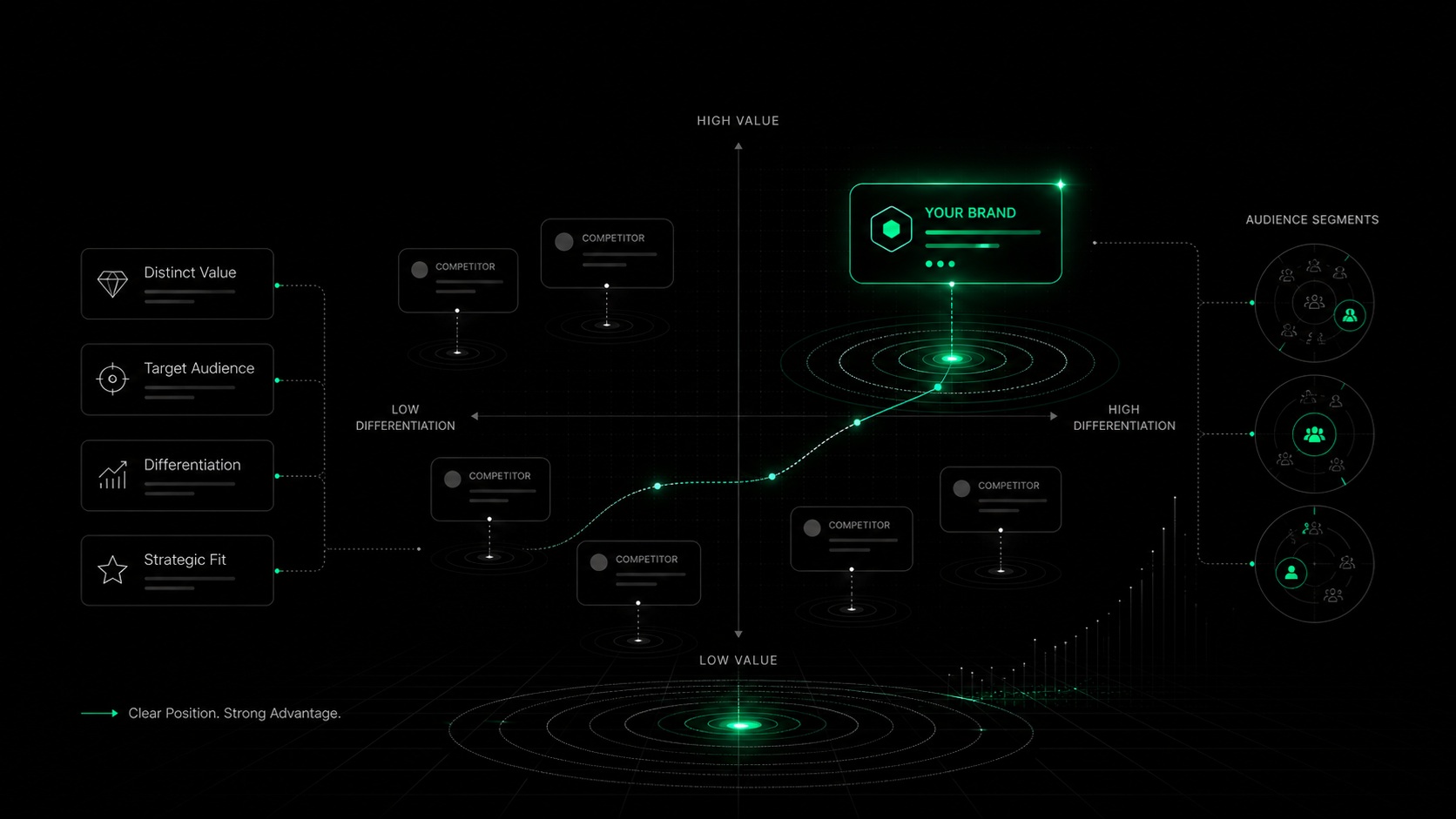
We combine market research, competitor intelligence, weak signal analysis, customer insight, and strategic positioning to identify where your business can compete more effectively. The outcome is a clearer view of the market, stronger differentiation, and a more confident strategy for growth, visibility, sales, and decision-making.
- Identify where market demand is moving and where opportunities are emerging.
- Analyse competitor positioning, claims, content, visibility, and market behaviour.
- Detect weak signals that may indicate future demand, opportunities, threats, category shifts, or competitor gaps.
- Clarify the strongest segments, audiences, and market opportunities to prioritise.
- Give leadership a clearer basis for strategic decisions, investment, and execution.

Market Positioning Strategy
We help define where you should sit in the market, who it should appeal to, and why customers should choose you. The result is a clear, practical positioning strategy that sharpens your role, strengthens your difference, and gives your business a more defensible place in the market.

Competitor Intelligence
We analyse how competitors position themselves, what they are promoting, which audiences they target, what language they use, and where they appear to be gaining traction. This can include reviewing assets, visibility, positioning, offerings, ads targetting, campaigns, signals, reviews, partnerships, and public activity.

Weak Signal Detection
We identify early signs of market change before they become obvious. By tracking shifts in search, customer questions, competitor behaviour, technology, regulation, funding, and buyer pain points, we help you spot emerging opportunities before the market gets crowded.

Market Trend Analysis
We assess the trends shaping customer demand, buying behaviour, competitive pressure, and category growth. This helps your business position for where the market is going, not just where it is today.

New Market Entry
We help businesses enter new markets, regions, services, or customer segments with a clearer strategy. By analysing demand, competitors, buyer expectations, and positioning gaps, we give your launch a stronger commercial foundation.

AI Buyer Persona Simulation
Synthetic buyer panels that test messaging, offers, objections, landing pages, and proposals against simulated decision-makers before anything goes to market.
FAQs
How do we know if our current positioning is limiting growth?
Common signs include inconsistent sales narratives, declining enquiry quality, margin pressure, longer sales cycles, increased price comparison, difficulty entering new segments, or a website that no longer reflects the company’s actual capability.
How does this help if we already have strong revenue?
Strong revenue does not always mean strong positioning. As businesses scale, their market message often lags behind their capability, leaving growth dependent on reputation, referrals, founder involvement, or sales effort rather than clear market advantage.
Can this help us move into a more premium position?
Yes. We identify what the market needs to believe before it will accept a more premium position, then clarify the proof, messaging, service framing, audience focus, and competitive contrast required to support that shift.
How do you identify where we can compete more effectively?
We analyse competitor positioning, buyer priorities, category movement, demand signals, service gaps, market language, proof points, and commercial opportunities to identify where your business has the strongest right to win.
Will this expose gaps between our strategy, sales, and marketing?
Yes. That is often one of the most valuable outcomes. We identify where leadership intent, sales conversations, website messaging, proposals, campaigns, and customer perception are not aligned.